5th human case of EEE confirmed in Massachusetts
"Even as the weather begins to cool, it remains critically important that people take steps to protect themselves and their families from mosquito bites."
Related Links
A fifth person has contracted the rare mosquito-borne Eastern Equine Encephalitis, or EEE, virus in Massachusetts amid the state’s first outbreak in several years, public health officials announced Thursday.
A man in his 70s from southwestern Middlesex County tested positive for the virus, the state Department of Public Health said in a statement.
EEE risk levels have elevated to critical status in Ashland, Hopedale, and Milford as a result, according to DPH. Bellingham, Blackstone, and Millville are now at high risk.
“Even as the weather begins to cool, it remains critically important that people take steps to protect themselves and their families from mosquito bites,” Public Health Commissioner Monica Bharel said.
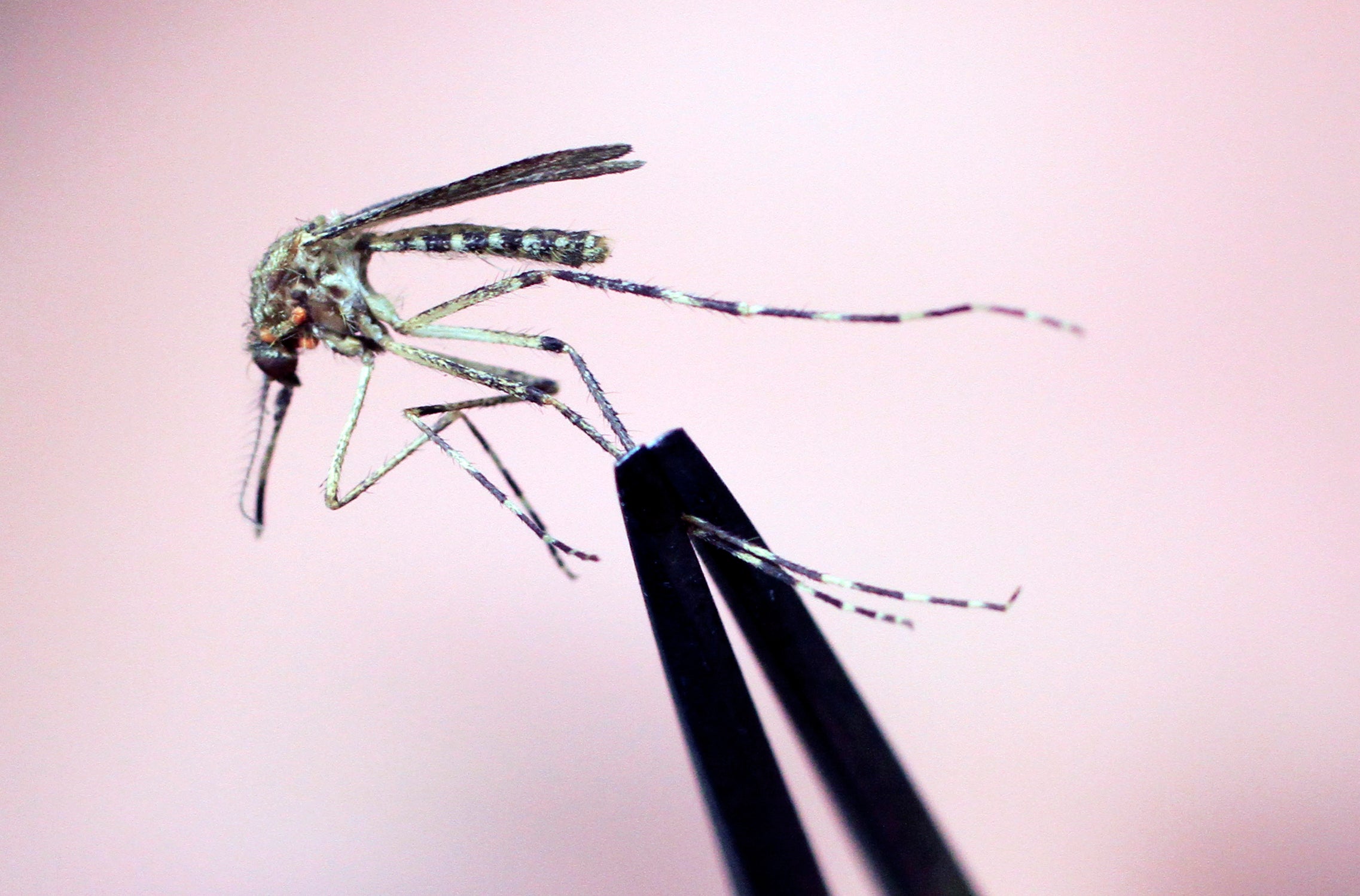
EEE, which spreads through infected mosquitos usually found in and around freshwater, hardwood swamps, carries symptoms that include brain swelling, coma, and fever.
“Death usually occurs 2 to 10 days after onset of symptoms but can occur much later,” the Centers for Disease Control says. “Of those who recover, many are left with disabling and progressive mental and physical sequelae, which can range from minimal brain dysfunction to severe intellectual impairment, personality disorders, seizures, paralysis, and cranial nerve dysfunction. Many patients with severe sequelae die within a few years.”
There is no vaccine for EEE.
Massachusetts is currently experiencing its first outbreak of the virus since 2012. This year, DPH has found EEE in 392 mosquito samples, many of which were in species that could spread the virus to people, officials said.
Last month, a Fairhaven woman died while hospitalized with EEE. The virus has also been confirmed in eight horses and one goat this summer, according to DPH.
The outbreak has prompted DPH to place 32 communities at the critical risk level, 39 at high risk, and 121 at moderate risk for EEE.

Officials are continuing to urge the public to take precautions, such as applying insect repellent, wearing long-sleeved clothing, and avoiding being outdoors at night during peak mosquito hours.
According to DPH, communities are conducting truck-mounted spraying for mosquitos. Aerial spraying was carried out over parts of Bristol, Middlesex, Plymouth, and Worcester counties last month.
“Aerial spraying has concluded for the season primarily due to evening temperatures being too low to permit effective aerial application,” DPH said in a statement. “Spraying for mosquitoes does not eliminate the risk of EEE transmission and the public is asked to continue to follow personal protection practices.”