
Sign up for the Today newsletter
Get everything you need to know to start your day, delivered right to your inbox every morning.
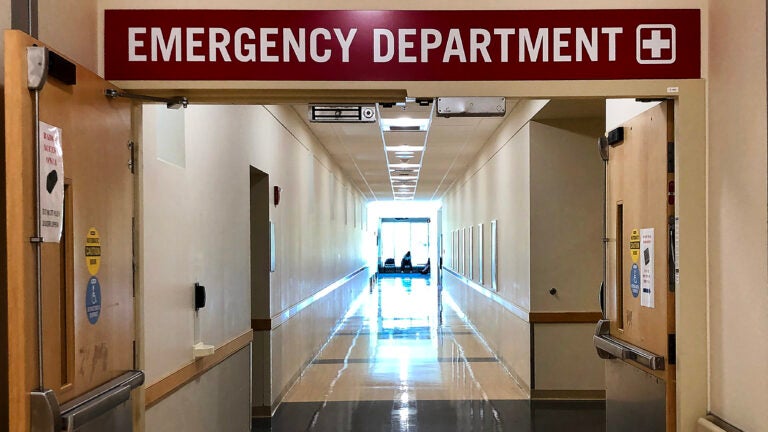
For some Massachusetts residents, a trip to the emergency room means settling in for a long night in a hallway chair or on a gurney behind a thin curtain. For others, it means being whisked in and out in a matter of minutes.
After Boston.com reported that Massachusetts ranks near the top in the nation for time spent in the emergency department — patients spend an average of 189 minutes in the ER before leaving, according to World Population Review — readers flooded our inbox with stories that give life to those numbers.
Their experiences varied widely. But a common thread emerged: unpredictability.
A handful of readers described surprisingly seamless visits to the ER.
“Zero minutes. I have been to Cape Cod Falmouth ER twice in the last three years. It might not compare to some of the top Boston hospitals but there was no wait time and they diagnosed and treated me promptly,” said Paul from Mashpee.
Similarly, Bill in Brighton recalled a quick visit to St. Elizabeth’s last summer.
“I was the only one there, and they took me right away. I guess I got lucky,” he said.
Many readers described waits stretching eight, 12, even 20 hours — often in significant pain.
At UMass Memorial Medical Center in Worcester, Kelly C. said her family twice faced marathon waits this winter.
“In December, [we were] brought in by ambulance at 7:30 a.m., waited 8 hours to be seen. On February 8, 2026, we waited 11 hours and left without being seen. We had been sent by my father’s doctor for concerning numbers on his routine blood work,” she recalled.
Another Worcester reader, Edward, said he was sent to UMass [Memorial Health] after his doctor feared he’d had a stroke.
“My doctor was worried I had a stroke. He called ahead, I was triaged and sat reading a book for 12 hours. I had a CAT scan and was told no stroke. I left for home. Three months later an MRI showed a stroke had happened,” he said.
Edward is not alone. The share of Massachusetts emergency department visits lasting 12 hours or more has risen steadily from 6.6% in 2020 to 9.9% in the first five months of 2024, according to the state’s Health Policy Commission.
In Western Massachusetts, reader Apple said her mother — a cancer survivor and diabetic — waited nearly 30 hours at Baystate Health in Springfield a few years ago without being seen by a nurse or doctor.
“She was severely sick, and in a lot of pain …They literally made her wait that long without being seen by a nurse or doctor. They put her in a hallway and forgot about her. She would ask for juice and crackers occasionally so her sugar wouldn’t run low. She only had so much insulin with her,” she said.
Eventually, Apple said she picked up her mother and brought her to Holyoke Medical Center, where the wait time was significantly less.
“We waited about 45 minutes before they brought her into triage. She was admitted immediately and stayed there for 5-6 days. She probably would’ve died if us kids didn’t convince her to go to another hospital!” she added.
Across the state, readers described emergency departments functioning as overflow units, with patients parked in hallways for hours at a time — a ripple effect health care leaders have attributed to staffing shortages and a lack of available inpatient beds.
At Brigham and Women’s Hospital, Laura M. said her elderly father spent eight hours on a hallway gurney waiting for X-ray and CAT scan imaging.
Delaney from Weymouth described a similar scene at South Shore Hospital.
“After being brought in by ambulance, [I spent] 20 hours in a hallway largely ignored by staff, with zero regard for my privacy or HIPAA, or my condition. When I spoke to a ‘Patient Experience Rep’ who approached me in that hallway, she just said ‘Yes, sorry, it’s terrible.’ She was right — it was,” Delaney said.
T. of Boston, said she spent 33 hours in the emergency department awaiting admission, part of it in what she described as an observation room — “which was a lot more comfy than the triage area which has patients on uncomfortable gurneys and two curtains separating you from patients on either side.”
“I have never in my life experienced anything like that before,” T said. “Their reason was high flu, short staff, and waiting for a bed to become available.”
Health care leaders say several factors are contributing to the long wait times patients are seeing across the state.
“While working around the clock to deliver timely, high-quality care to everyone who enters their doors, healthcare organizations are challenged by tight capacity constraints, workforce shortages in key roles, and the inability to efficiently discharge patients to the next medically appropriate site of care,” a spokesperson for the Massachusetts Health and Hospital Association told Boston.com in a statement.
“Patients are also presenting to hospitals sicker and in need of longer hospital stays,” the association added.
For some, the delays compounded already frightening medical situations.
Jess B. went to the emergency department at the MetroWest Medical Center in Natick, concerned she might have an ectopic pregnancy. She ultimately spent 16 total hours across two visits — eight hours each time — waiting for lab results, ultrasounds, and confirmation of a diagnosis.
“I was pleased with the care itself — they took my concern seriously, were able to diagnose and treat my issue before it became a big emergency, and I do appreciate that my situation was much lower grade than probably everyone else who came in during those times — but it took sixteen hours total. Two full workday shifts!” she said.
Others, like Kim S. from Pittsfield, left before ever being seen.
“We waited for over 2 hours at Berkshire Medical Center in Pittsfield Massachusetts,” she said.
Deb of Chelmsford said she waited 10 hours at her local ER in Lowell before leaving — a delay she says contributed to permanent hearing loss.
“Three hours [for wait time] would be a dream. My local ER is in Lowell, MA. I live outside of Lowell. The wait times are 10-plus hours,” she added. “I only have gone for a true emergency.”
Shelley M. described waiting more than eight hours for care and said the experience has made her reluctant to return.
“People were waiting to be taken back for treatment and it took several hours for them to even take my blood work. I am not interested in going back to the hospital because they don’t do a good job at helping me anymore,” she said.
Several readers emphasized that nurses and doctors appeared overwhelmed rather than indifferent.
At Brigham and Women’s, Laura M. of Brookline said, “The staff was great — there just seemed to be a really long wait time for testing.”
Bill H. of Cheshire said visits to Berkshire Medical Center for his wife typically move quickly through triage, with total ER stays of two to four hours.
“Wait times until assessment have been relatively short, under 10 minutes. Time to being brought ‘behind the curtain’ is anywhere between immediate, under 2 minutes, to perhaps 20 minutes depending on ‘triage’ assessed needs,” he said.
Still, many readers described crowded waiting rooms, patients in visible distress, and emergency departments stretched far beyond what they remembered from years past.
Lou of Mattapoisett, whose wife has ovarian cancer, said repeated ER visits have become part of a grueling routine.
“Our time spent in the ED — before she could be admitted — ranged from seven to more than twenty hours. In all but three of those visits she did not even get a bay, rather she was in a bed in a hallway. It is a disgrace. The only time we did not wait was when she was taken by ambulance. The so-called vaunted health care system of Massachusetts is a joke,” he decried.
State data shows the share of Massachusetts emergency department visits lasting 12 hours or more has climbed in recent years. Health care leaders have pointed to workforce shortages, limited post-acute placements, and rising behavioral health needs as key drivers.
For patients, though, the statistics fade next to the lived experience: the anxiety of waiting while symptoms worsen, the discomfort of a hallway gurney, the uncertainty of not knowing when — or if — someone will call your name.
For some, the ER visit was over almost as soon as it began.
But for many others, it was a painful test of patience.

Get everything you need to know to start your day, delivered right to your inbox every morning.





Be civil. Be kind.
Read our full community guidelines.To comment, please create a screen name in your profile
To comment, please verify your email address